
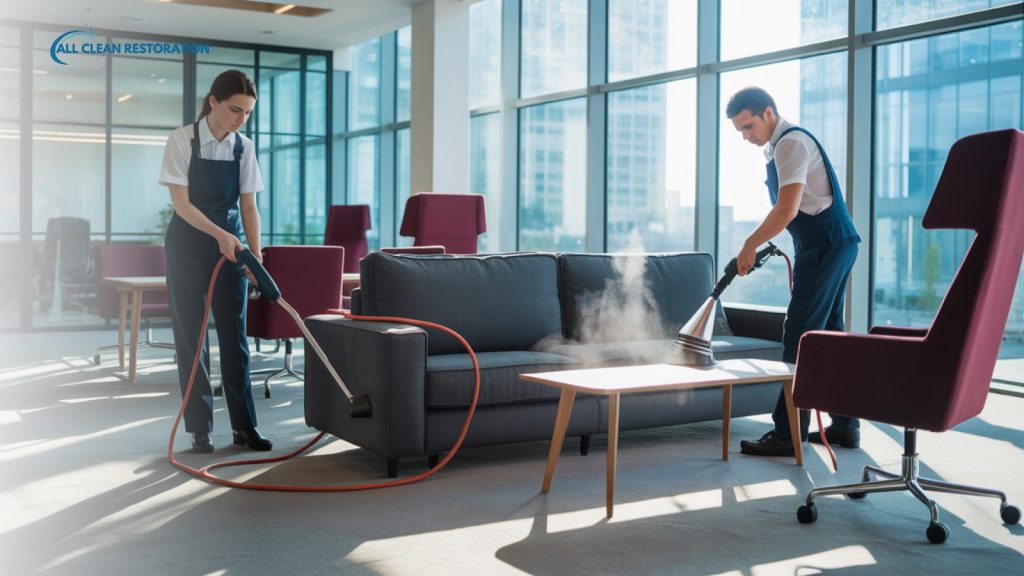
The Complete Guide to Office Upholstery Cleaning for Businesses
A clean office is more than just visually appealing—it directly impacts employee health, productivity, and your company’s professional image. While floors and desks often receive regular attention, office upholstery such as chairs, sofas, partitions, and waiting-area furniture is frequently overlooked. Over time, these fabric surfaces collect dust, allergens, stains, bacteria, and odors that can affect both hygiene and comfort.
This complete guide to office upholstery cleaning for businesses explains why professional cleaning matters, how often it should be done, the best cleaning methods, and how to maintain upholstery for long-term use.
What Is Office Upholstery?
Office upholstery refers to all fabric-covered furniture and soft surfaces within a workplace, including:
- Office chairs and task seating
- Sofas and couches in reception areas
- Fabric partitions and cubicle panels
- Conference room seating
- Waiting room furniture
These items experience daily use and are exposed to sweat, spills, dust, food particles, and airborne pollutants, making regular cleaning essential.
Why Office Upholstery Cleaning Is Important for Businesses
Improves Workplace Hygiene
Fabric surfaces trap dust mites, bacteria, allergens, and germs. Without proper cleaning, upholstery can contribute to poor indoor air quality and increase the risk of allergies and illness among employees.
Enhances Professional Appearance
Clients and visitors often notice seating and reception furniture first. Clean, well-maintained upholstery creates a positive first impression and reflects professionalism.
Extends Furniture Lifespan
Dirt and debris break down fabric fibers over time. Regular upholstery cleaning helps preserve material quality, preventing premature wear and costly replacements.
Boosts Employee Comfort and Productivity
Clean seating improves comfort, reduces odors, and creates a healthier environment, leading to better focus and higher employee morale.
How Often Should Office Upholstery Be Cleaned?
The ideal cleaning frequency depends on usage, office size, and foot traffic:
- High-traffic offices: Every 3–6 months
- Moderate-use offices: Every 6–9 months
- Low-traffic offices: Once a year
Reception areas, conference rooms, and shared seating should be cleaned more frequently than individual workstations.
Common Types of Upholstery Fabrics Used in Offices
Understanding fabric type is essential for proper cleaning:
- Synthetic fabrics (polyester, nylon): Durable and stain-resistant
- Natural fabrics (cotton, wool): Require gentle cleaning methods
- Leather or faux leather: Need specialized cleaning and conditioning
- Blended fabrics: Require balanced moisture and cleaning agents
Professional cleaners assess fabric type before choosing the appropriate method.
Professional Office Upholstery Cleaning Methods
Steam Cleaning (Hot Water Extraction)
This method uses hot water and cleaning solutions to deep-clean fabric fibers and remove embedded dirt, bacteria, and allergens.
Best for: Heavily soiled upholstery and deep cleaning
Benefits: Thorough, hygienic, and effective
Dry Upholstery Cleaning
Low-moisture cleaning agents are applied and vacuumed away, making it ideal for delicate fabrics.
Best for: Offices that need quick drying times
Benefits: Minimal downtime and fabric protection
Foam Cleaning
A cleaning foam is applied, worked into the fabric, and then removed with vacuuming.
Best for: Light to moderate stains
Benefits: Controlled moisture and gentle cleaning
Spot and Stain Treatment
Targeted treatments remove specific stains like coffee, ink, or food spills without cleaning the entire surface.
DIY vs Professional Office Upholstery Cleaning
DIY Cleaning
- Suitable for minor stains and routine maintenance
- Limited effectiveness against deep-seated dirt
- Risk of fabric damage if incorrect products are used
Professional Cleaning
- Uses commercial-grade equipment and safe solutions
- Removes allergens, bacteria, and odors
- Extends furniture life and ensures consistent results
For businesses, professional upholstery cleaning is the safer and more effective option.
Benefits of Hiring a Professional Office Upholstery Cleaning Service
- Expertise in fabric-specific cleaning
- Advanced equipment and eco-friendly products
- Reduced downtime with fast-drying methods
- Compliance with hygiene and safety standards
- Consistent results and long-term cost savings
Professional services also help businesses maintain a healthier indoor environment.
How to Prepare Your Office for Upholstery Cleaning
Before professional cleaning, businesses should:
- Inform employees about the cleaning schedule
- Clear personal items from furniture
- Identify problem areas or stains
- Provide access to all upholstery areas
Proper preparation ensures efficient and thorough cleaning.
Tips for Maintaining Clean Office Upholstery
- Vacuum upholstery weekly to remove surface dust
- Address spills immediately to prevent staining
- Avoid eating on fabric furniture
- Schedule regular professional cleanings
- Rotate seating usage when possible
Preventive maintenance reduces long-term cleaning costs.
Choosing the Right Office Upholstery Cleaning Company
When selecting a service provider, consider:
- Experience with commercial upholstery
- Use of safe, eco-friendly cleaning products
- Certified and trained technicians
- Flexible scheduling options
- Transparent pricing and service guarantees
A reliable provider ensures quality results without disrupting business operations.
Conclusions
Office upholstery cleaning is not just a cosmetic task—it’s a vital part of maintaining a healthy, professional, and productive workplace. Clean upholstery improves air quality, enhances comfort, protects furniture investments, and leaves a lasting impression on clients and employees alike.
By investing in regular professional office upholstery cleaning, businesses can create a cleaner environment, extend the life of their furniture, and promote a positive workplace culture.